
These vegan pierogi are a dairy-free alternative to traditional Polish pierogi with cheese and potato. The tangy filling mixture of potatoes, tofu and onion encased in soft pierogi dough is deliciously addictive! Easy to make, healthy and perfect for sharing.

These vegan pierogi are based on traditional Polish pierogi ruskie with cheese and potato. I've replaced the cheese with tofu and added a small amount of vinegar to emulate the tangy flavour of the classic vegetarian version.
I made these plant-based pierogi using my foolproof 4-ingredient vegan pierogi dough recipe (I use it in all my pierogi recipes) which lets you roll it out thinly producing deliciously soft pierogi. They are easy to make and taste fantastic the next day, too. See my tips and serving suggestions at the bottom of the post.
What makes these vegan pierogi special
- They taste just like the classic Polish potato and cheese pierogi everyone loves!
- The filling mixture includes tofu, which is a good source of healthy protein - so these pierogi are satisfying as well as low in fat.
- They are versatile and customisable (see my tips at the bottom of the post).
Plant-based pierogi ingredients and substitutions
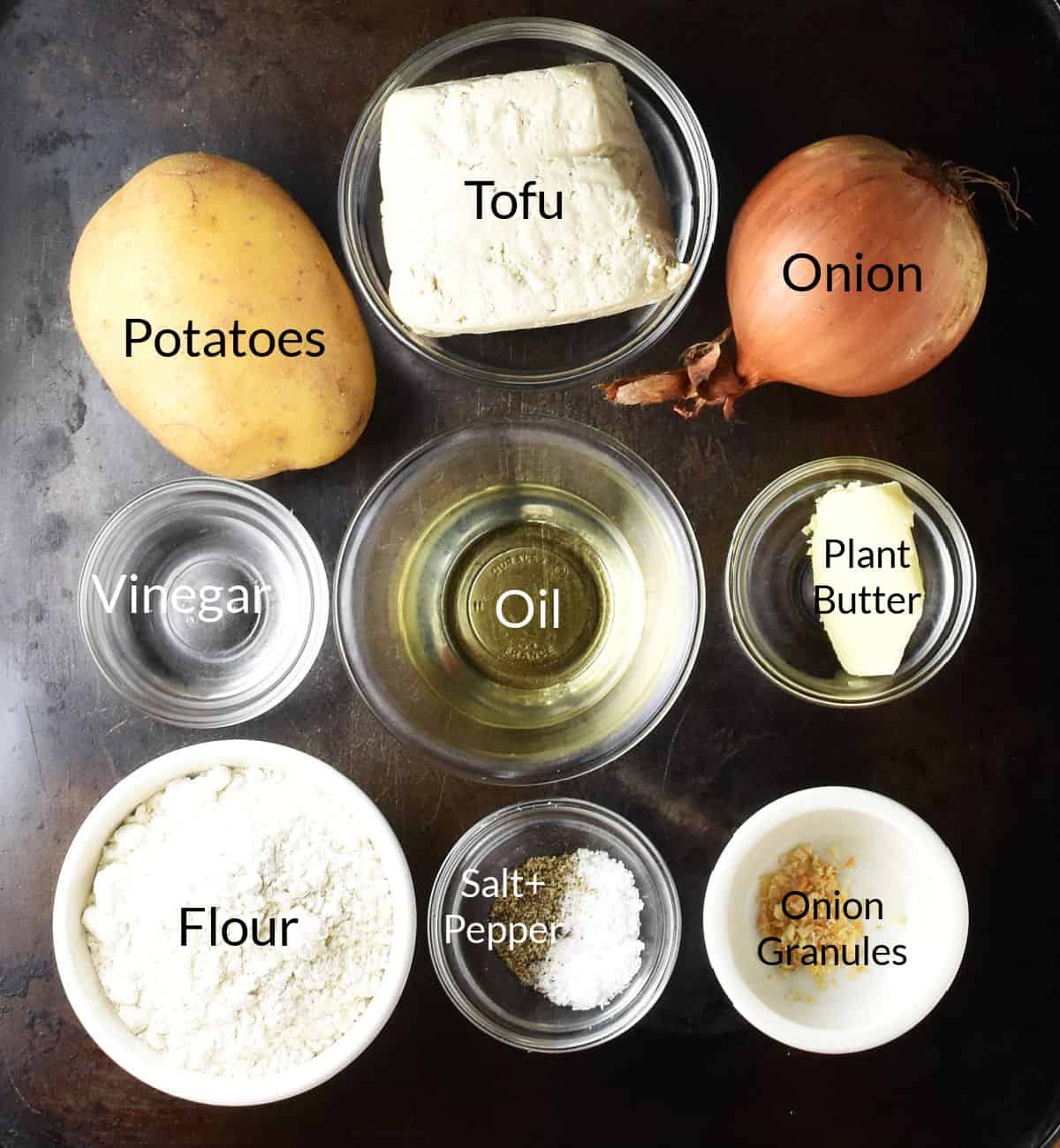
For the filling
- Potatoes:
Potatoes are an essential classic pierogi ingredient. I recommend using higher starch/floury potatoes (good for mashing), such as Russets, Yukon Golds (or Maris Piper/King Edwards in in UK).
- Tofu:
I recommend using firm tofu but medium-firm is also suitable. Silken tofu won't produce the right texture and may make the filling mixture too runny so I do not recommend using it. (If you are looking for more vegan recipes using tofu see also my vegan bolognese sauce and easy tofu curry).
- Onion.
- Onion granules: Enhance the flavour.
- Vinegar: Use either rice or white wine vinegar (another neutral tasting vinegar).
- Oil: Use either vegetable or another mild tasting oil, such as rice bran or corn.
- Plant butter: enhances the flavour.
- Salt and pepper: it's important to season the filling generously.
For the dough
- Flour: All-purpose/plain.
- Oil: use either vegetable or mild tasting olive oil.
- Water: make sure it's hot.
- Salt.
Equipment you'll need
- Large bowl, for mixing the dough ingredients. Shallow bowl for mashing the tofu.
- Potato masher, for mashing up the tofu, potatoes as well as the filling mixture.
- Rolling pin and kitchen towel.
- Cookie cutter or glass with a rim of about 7cm/3in.
- Small pan, for frying the onion.
- Large pot, slotted spoon and plate.
Step-by-step recipe instructions
Make filling
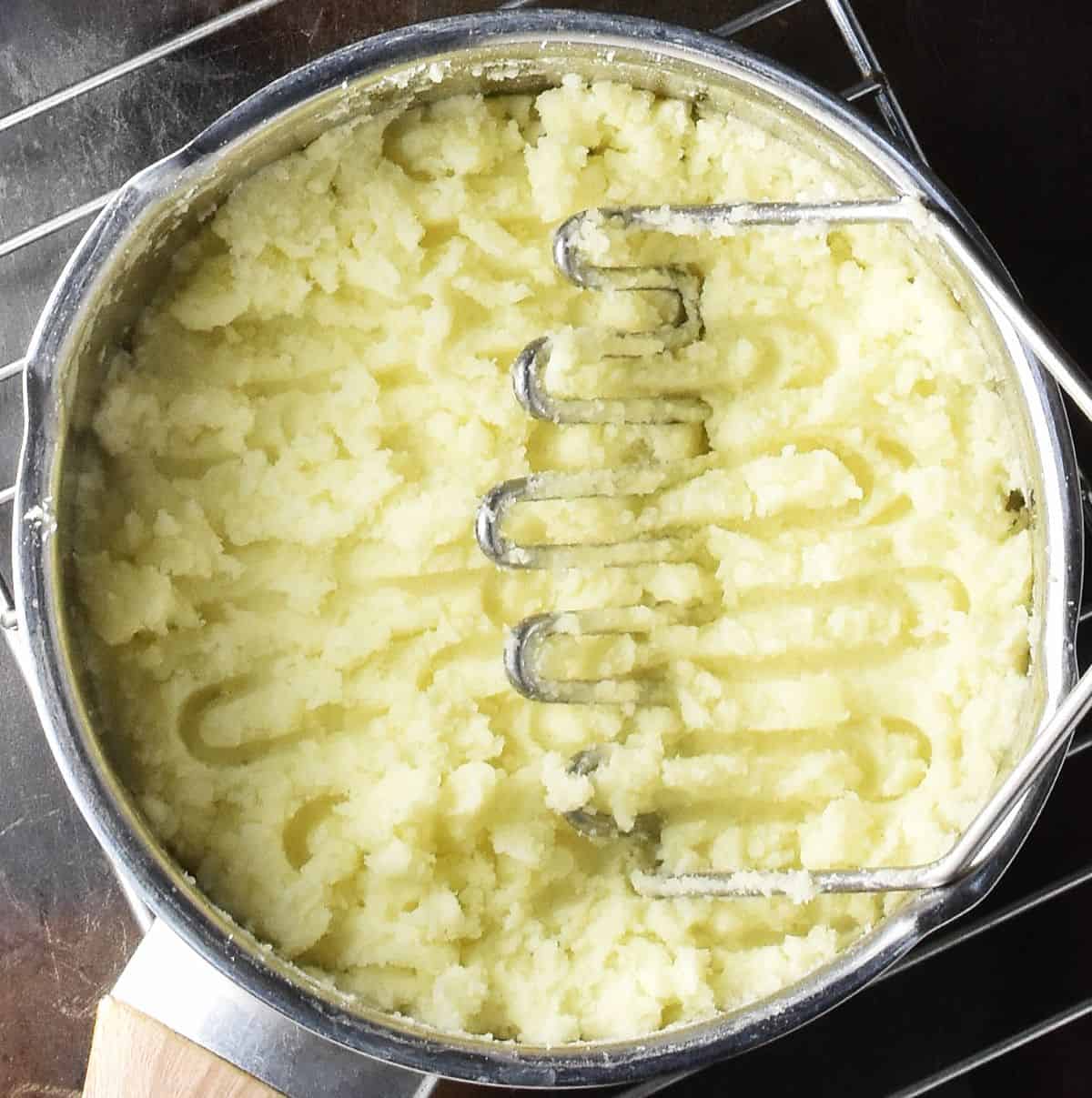
1. Boil potatoes: Peel and boil the potatoes in salted water. Drain well and mash until smooth and creamy. Set aside to cool.
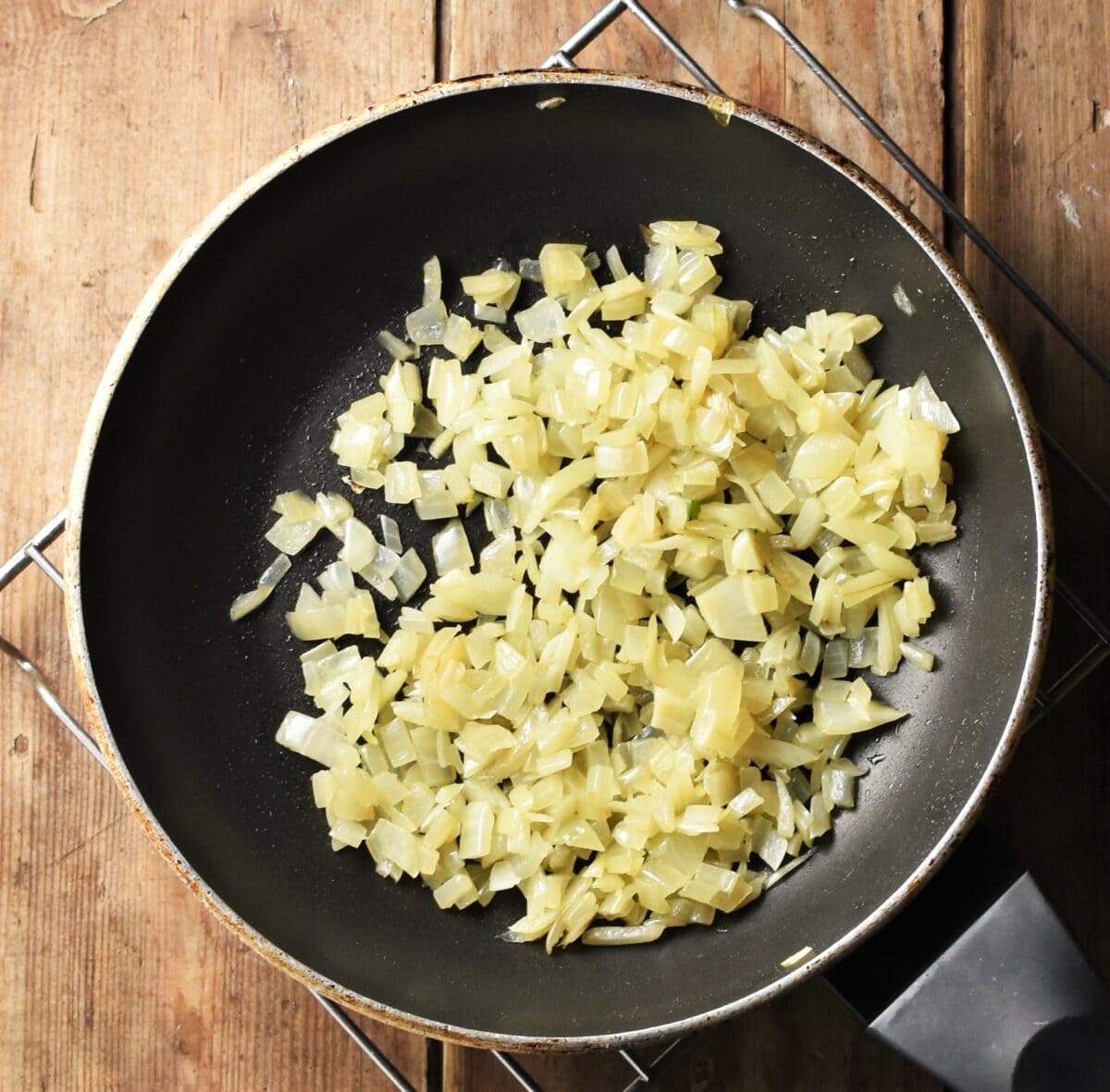
2. Fry onion: In the meantime heat 1 tablespoon of oil and 2 teaspoons of butter, add the onion and cook gently over a low/medium heat for about 5 minutes until softened and translucent, stirring often. Do not brown the onion. Remove from the heat and add to the potatoes.
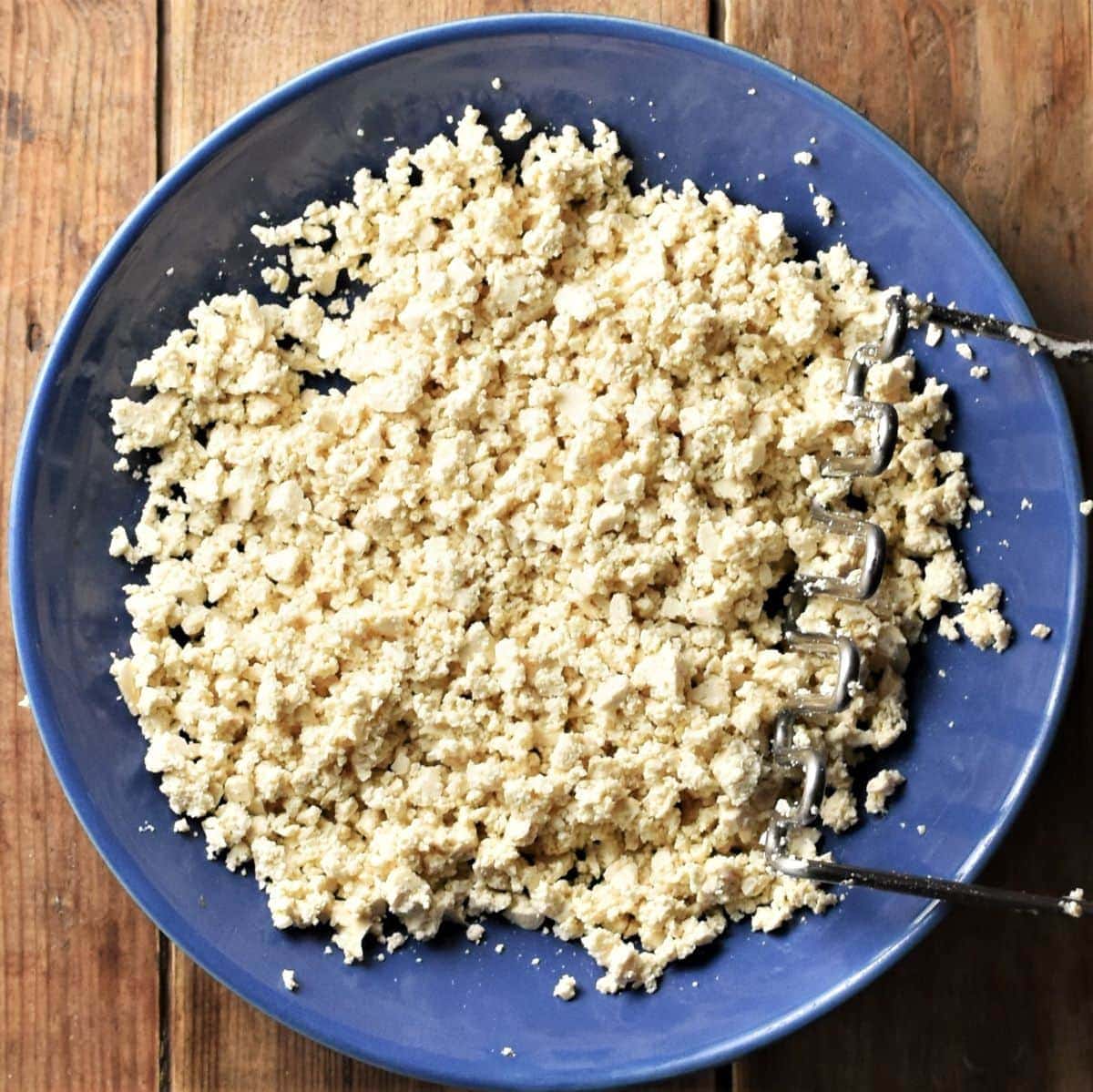
3. Mash tofu: Place tofu pieces in a shallow bowl and mash thoroughly until crumbly using a potato masher.
4. Combine mixtures: Combine the potato and onion with the tofu, vinegar, onion granules, 1 teaspoon of fine sea salt and pepper to taste (be generous). Using a potato masher mix the ingredients until thoroughly incorporated and the mixture is thick and creamy. Taste to see if the seasoning needs adjusting (be generous!).
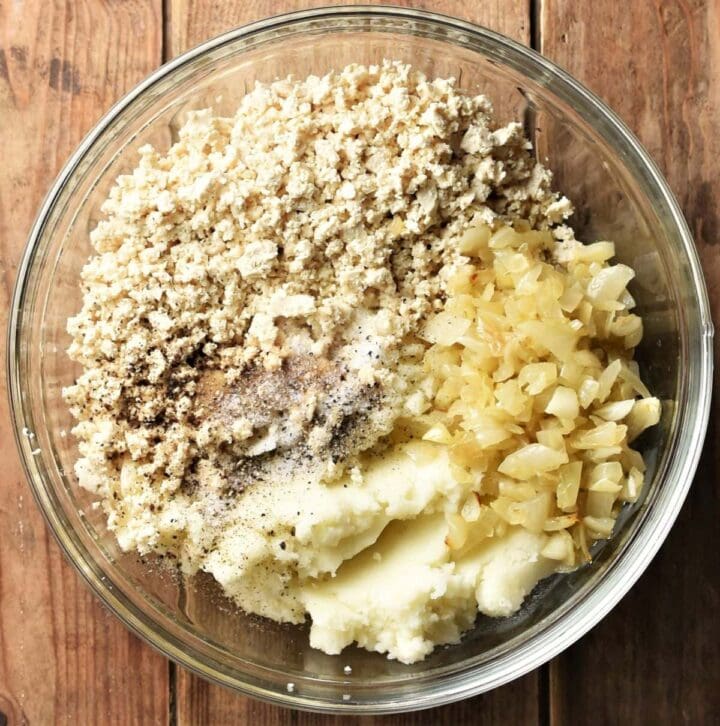
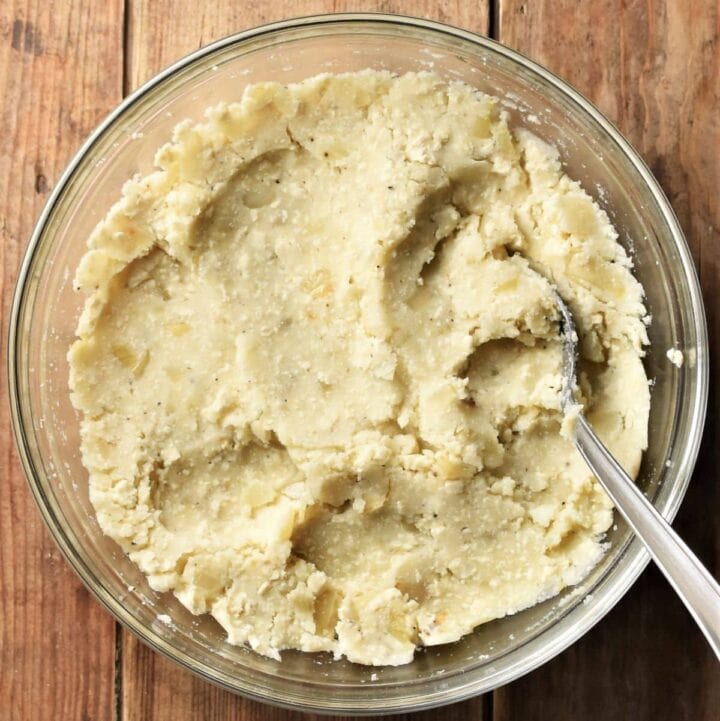
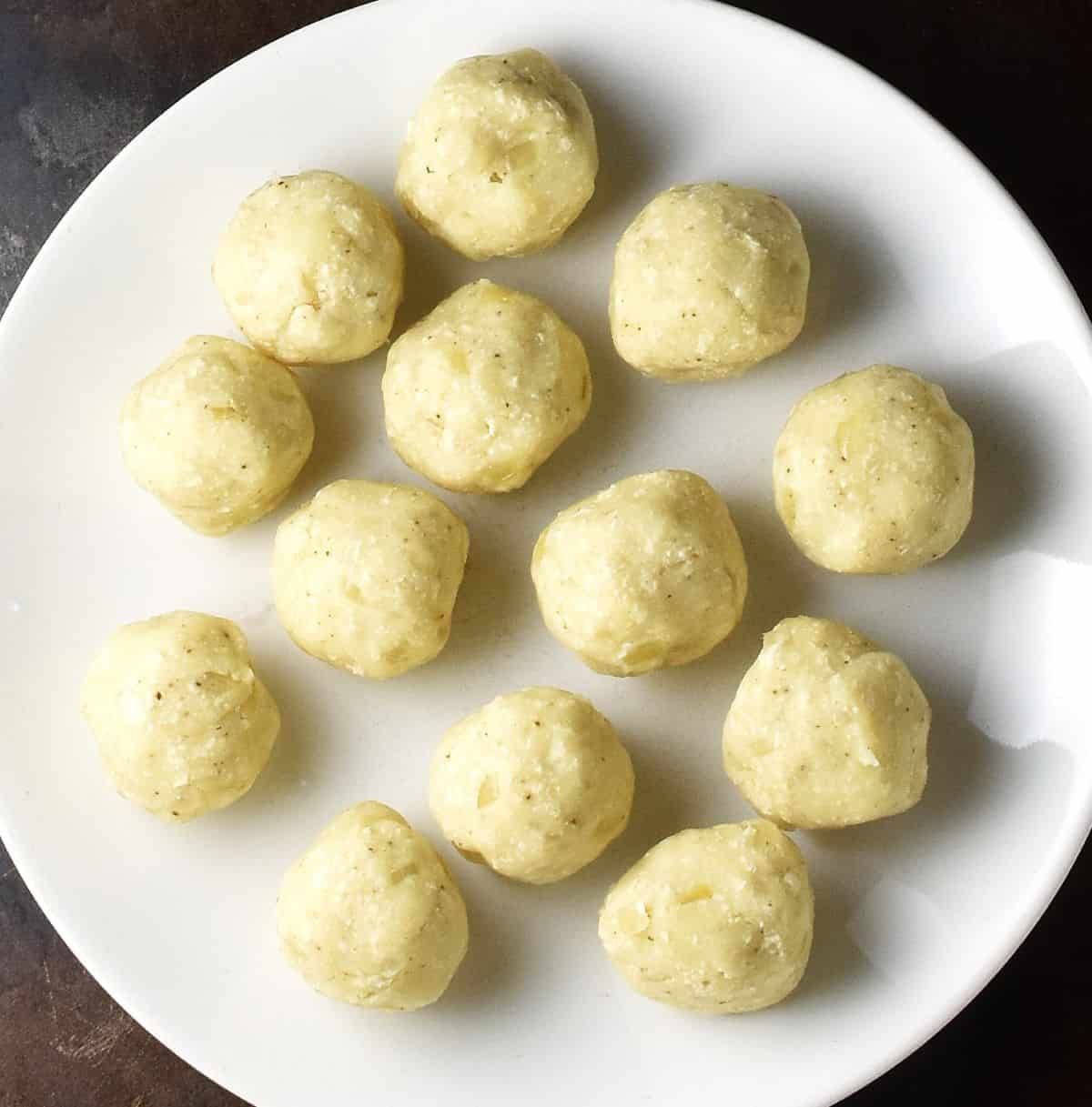
5. Make pierogi filling balls: Form filling balls the size of small walnuts (weighing 18-19 grams) between the palms of your hands. Refrigerate while you make the dough.
Make dough
6. Knead dough: To a large bowl add the flour, salt and oil and gradually pour in the hot water stirring all the time. Bring the mixture together to form a rough dough. Turn the dough onto a clean surface and knead for 6-8 minutes until soft and silky smooth. Cover loosely with cling film or a bowl and set aside for 30 minutes (longer is fine).
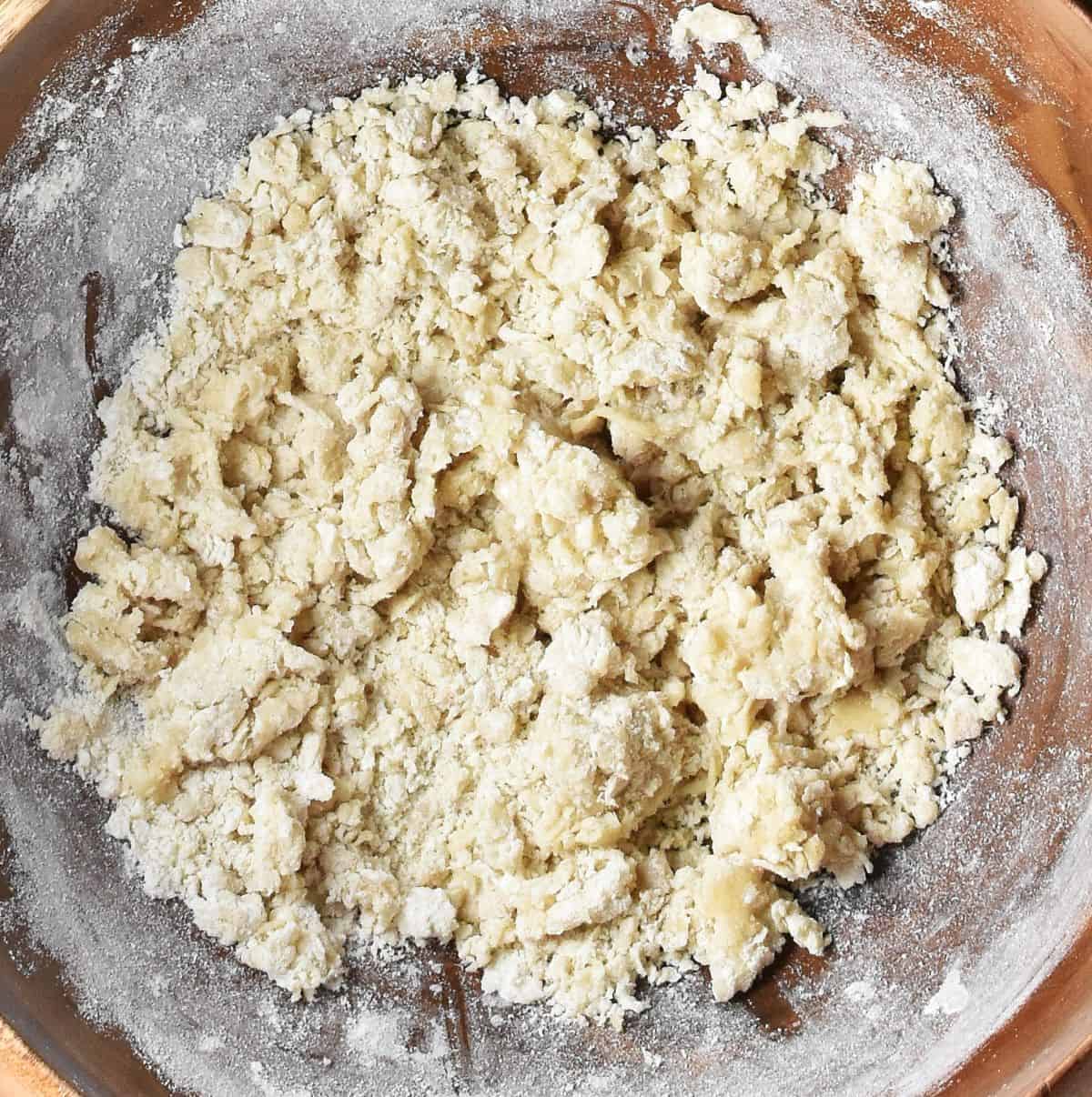
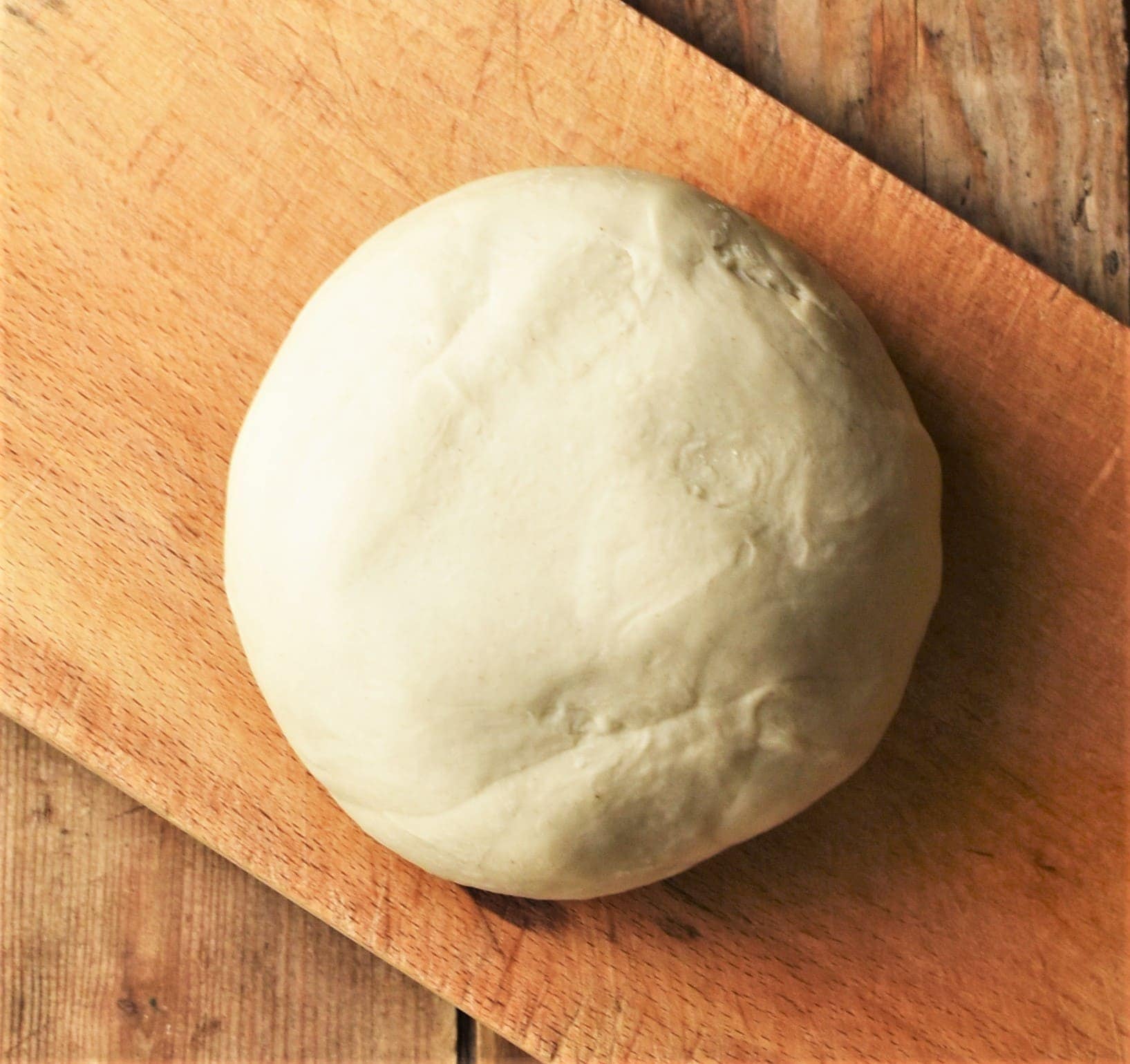
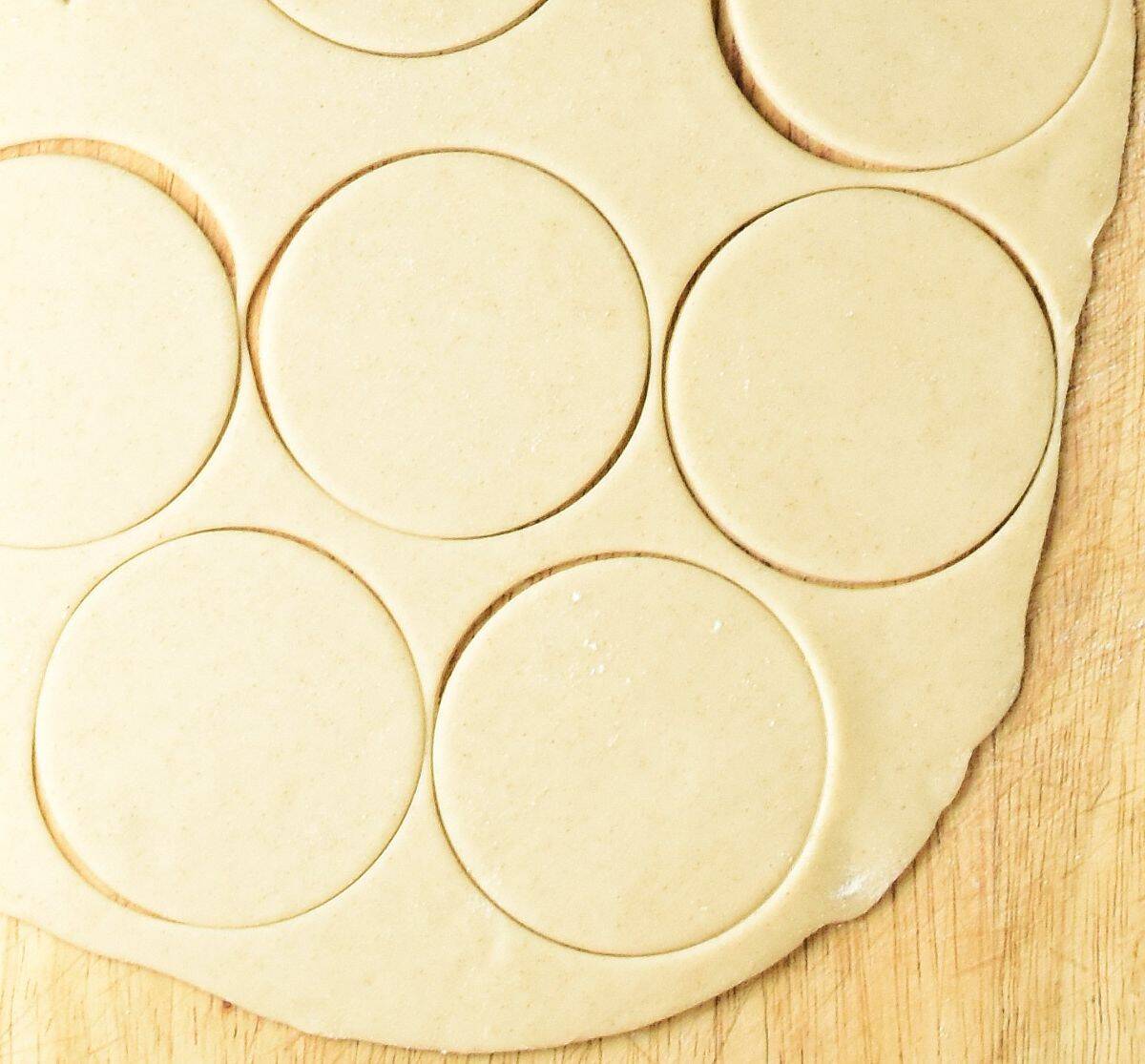
7. Roll out dough: Divide the dough into 2 parts (easier to work with) and roll out one part (keeping the other covered) on top of a lightly floured surface to a thickness of about 2mm (quite thinly). If the dough becomes sticky as you roll sprinkle with a little flour and spread over the surface using the palm of your hand then turn it over (you can do this 2-3 times) and continue rolling. Using a cookie cutter or the rim of a glass with a diameter of about 7cm/3in cut out rounds (gather the dough scraps and add to the remaining dough).
TIP: Add only as much flour as is necessary (to avoid tough, chewy pierogi). At this point also start heating a large pot of water (with about 1.5 teaspoons of salt).
Assemble
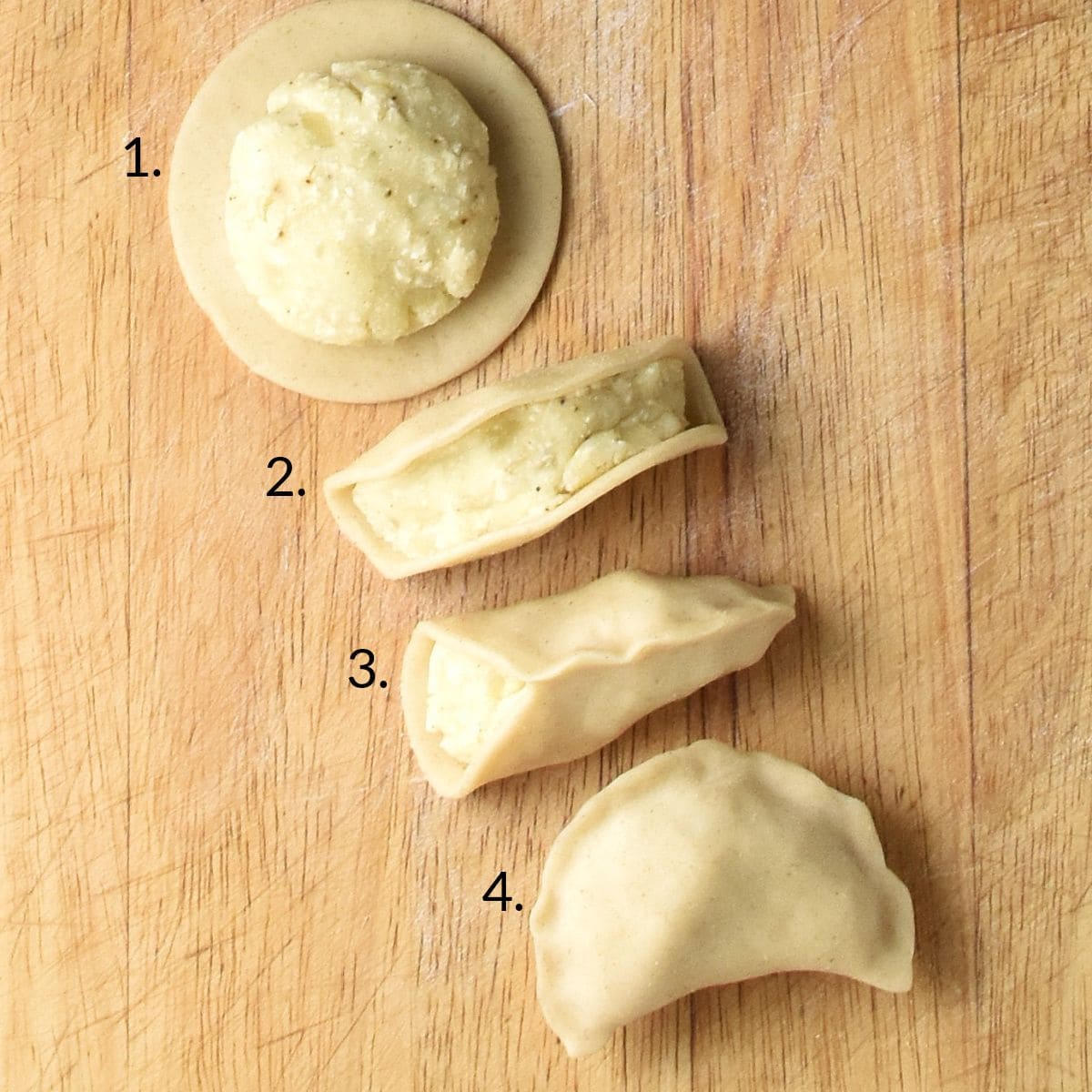
8. Form pierogi: Place a dough round in the palm of your hand (if the dough sticks to your work surface use a thin spatula to help it come away) then place the filling ball in the middle and flatten. Bring the sides together and using your fingertips stick the edges of each dumpling together pushing the filling into the dumpling away from the edges (go over the edges twice but try not to make them too big).
TIP: Keep the pierogi on top of a floured surface covered with a kitchen towel to prevent them becoming dry.
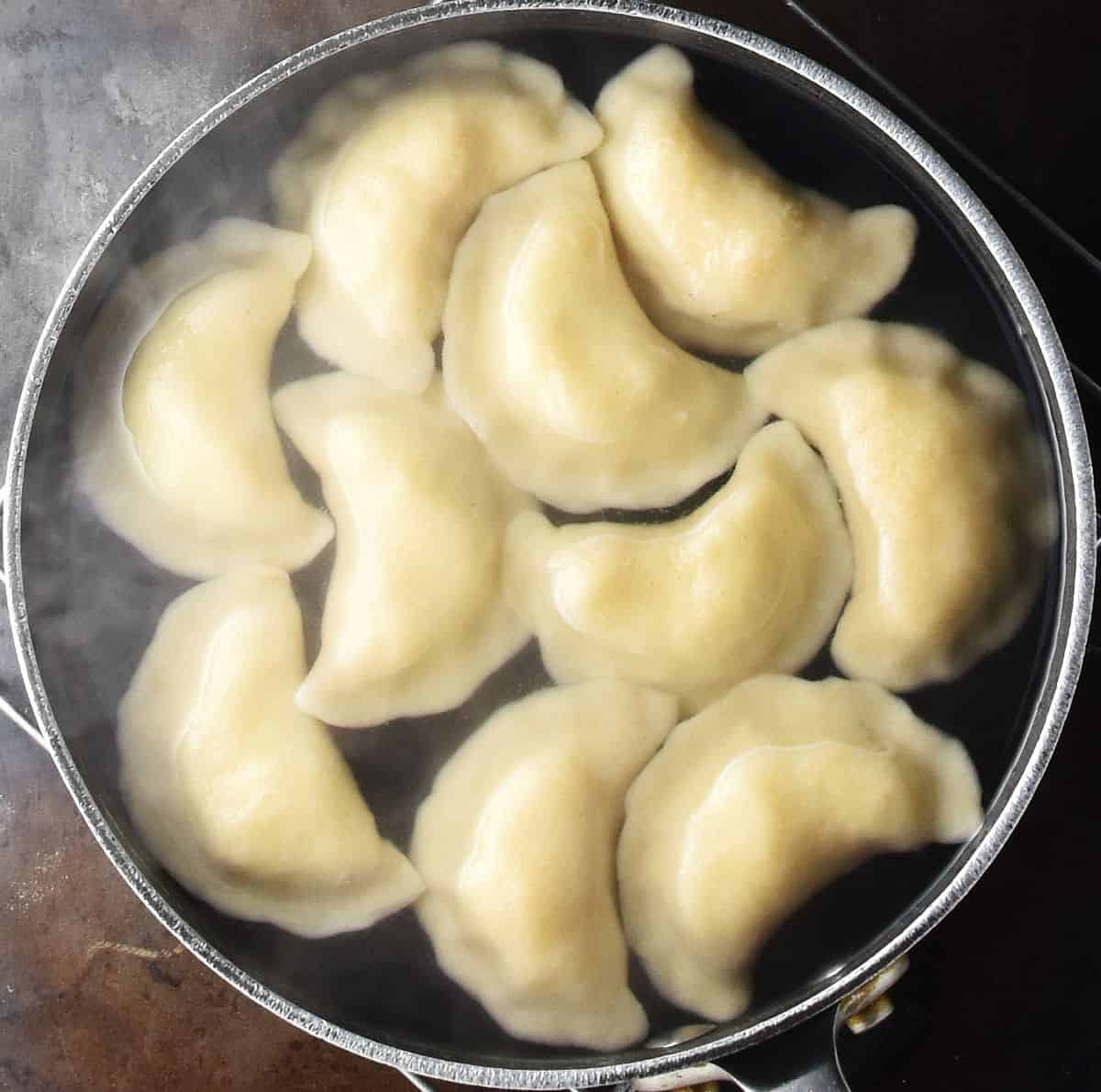
9. Boil pierogi: When the water starts to boil carefully place the pierogi in the pot one by one (10-12 per batch). Stir gently with a wooden spoon. Once all the pierogi have come up to the top and the water starts boiling too rapidly lower the heat and simmer for about 4 more minutes. Stir throughout as needed to prevent the pierogi sticking to the bottom of the pot and each other.
10. Serve: Remove from the heat and using a slotted spoon lift the pierogi out of the pot and place in a single layer on top of a lightly greased plate. Drizzle with a little butter and either serve immediately or cover while you make the next batch. See serving suggestions below.
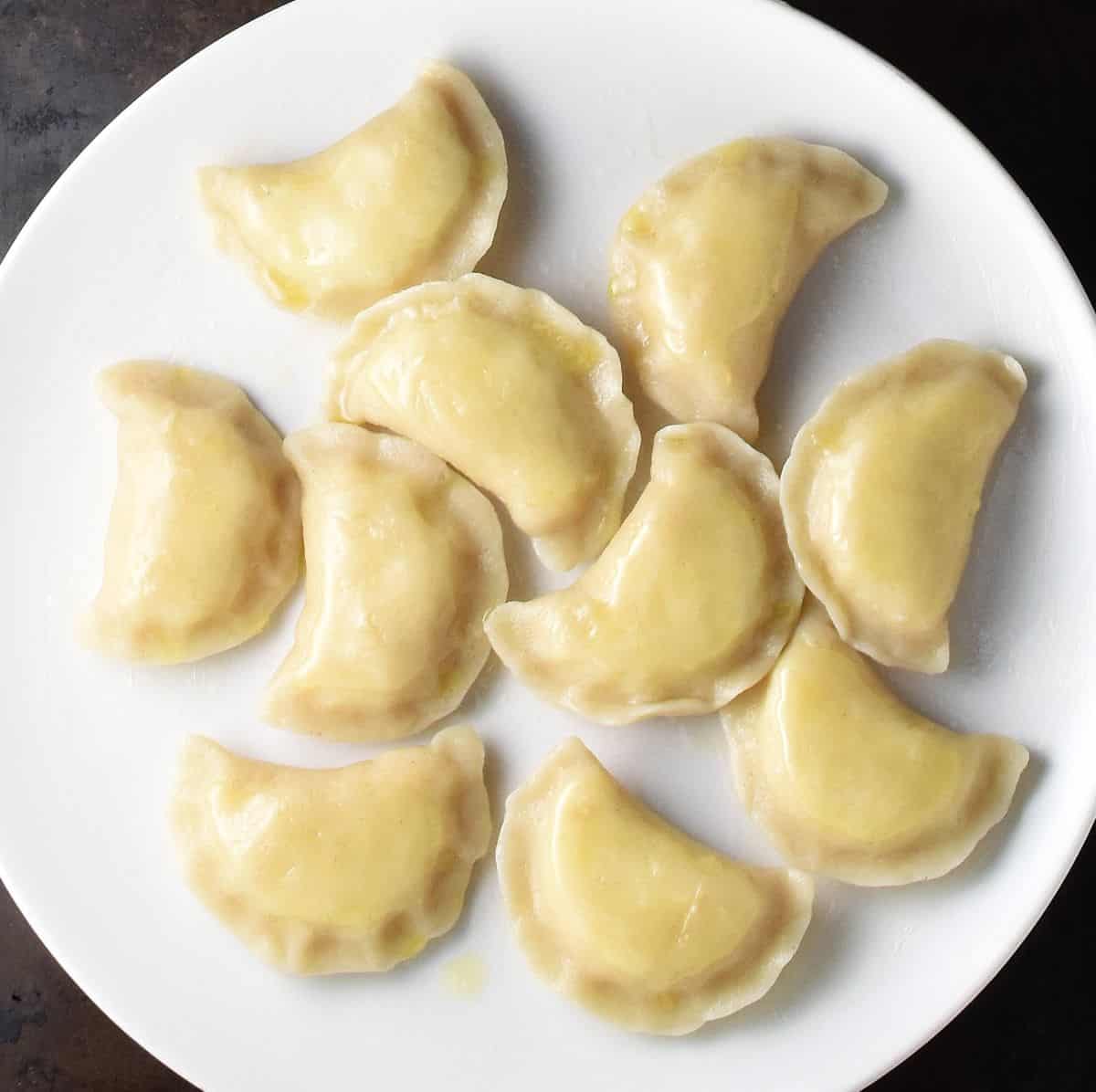
Serving suggestions
Polish dairy-free pierogi dumplings can be served straight from the pot with a drizzle of plant butter, vegan yogurt or fried onions (see preparation tips below). Alternatively shallow fry them for a few minutes on both sides over a medium heat until crispy and golden (after boiling and resting them first to remove excess moisture from cooking). Serve either on their own or with fried onions (see photo at the top of the page).
- To prepare the onion for serving Polish-style potato-tofu pierogi chop it finely then cook over a low-medium heat along with a tablespoon of oil and vegan butter (each) for several minutes until lightly browned and crispy (you can add a sprinkle or salt and sugar to help it along). Stir frequently to avoid browning the onion too much.
I recommend preparing the onion in advance (and reheating later) so that you can serve your pierogi as soon as they are ready.
What can I make ahead
- The dough: This can be made the night before and refrigerated wrapped tightly in cling film. As pierogi dough is made with hot water it needs to cool completely before refrigerating (keep it covered loosely with cling film as it cools). Bring up to room temperature before rolling out.
- The filling mixture: You can also prepare the filling the night before, cover and refrigerate.
How to add more flavour to vegan pierogi dumplings
As with any dish made with few ingredients it's important to add a sufficient amount of salt and pepper so you don't end up with bland tasting pierogi. Taste the filling mixture before making the dumplings and adjust the flavour as required.
These dairy-free pierogi can be also made with smoky tofu or another type of tofu for a different flavour twist. You can also add nutritional yeast for a more 'cheesy' flavour (add to taste).
A plant-based pierogi filling often used in Poland is a mixture of sauerkraut and mushrooms. These popular pierogi are one of 12 traditional dishes served on Christmas Eve.
Top tips
- Potatoes: Mash the potatoes while still hot to ensure the mixture is smooth and creamy.
- Tofu: Gently squeeze excess moisture out of the tofu and mash thoroughly until crumbly before combining with the potato.
- Seasoning: Once you've combined all the filling ingredients it is important to taste the mixture and adjust the seasoning as needed.
- The dough: Knead the dough for about 6-8 minutes until soft. Divide into 2-3 parts before rolling out (easier to work with). Dust the work surface and rolling pin with a little flour before rolling out the dough. The rolled out dough should be quite thin (this will produce delicious pierogi).
- Forming pierogi: It is a good idea to wipe your fingertips (paper towel works well) from time to time as you form your pierogi. Keep the pierogi covered with a kitchen cloth to prevent them becoming dry.
- Boiling pierogi: It's best to boil each batch as soon as you've made it.
- Pierogi size: My vegan pierogi dumplings are on the smallish side but you can use a cookie cutter or glass that's a little larger (ex. 8cm diameter) and make large pierogi if you prefer. But keep in mind there will be less of them.
- Serving: Best served hot.
Storing and reheating
You can refrigerate vegan potato and 'cheese' pierogi for up to 4 days. Place the pierogi (lightly greased and cooled completely, but not fried) in a bowl or casserole dish, cover and refrigerate.
Reheat in the microwave or shallow fry until golden.
Freezing
- Uncooked pierogi: arrange on top of a floured tray and freeze for 2 hours then transfer into a freezer bag/plastic container and freeze for up to 3 months. Cook from frozen (they will need 5-6 minutes).
- Cooked pierogi: cool completely first then arrange individual portions in small trays (brush the pierogi thoroughly with a little oil/butter beforehand). Cover tightly with plastic wrap (alternatively use an airtight container) and freeze for up to 3 months. Defrost in the fridge overnight before reheating.
Related vegan recipes to try next
- Vegan Cabbage Rolls (with Mushrooms and Lentils)
- Blueberry Pierogi ('Z Jagodami')
- Polish Porcini Mushroom Dumplings (Uszka)
See also these other delicious vegan/vegetarian meals as well as more authentic Polish recipes!
Recipe

How to Make Vegan Pierogi
Equipment
- Large bowl and wooden spoon
- Rolling Pin and kitchen towel
- Large pot, slotted spoon and plate
- Small pan
- Cookie cutter or glass with 7cm/3" diameter
Ingredients
For the filling
- 1 pound (450 g) potatoes Russets or other all-rounders
- 5.64 ounces (160 g) firm tofu excess moisture gently squeezed out
- 1 medium onion finely chopped
- 1 tablespoon vegetable oil
- 2 teaspoons vegan butter
- 4 teaspoons rice vinegar or white wine vinegar, add to taste
- ¼ teaspoon onion granules or to taste
- 1 teaspoon fine sea salt plus black pepper to taste, be generous
For the dough
- 2 cups (250 g) all-purpose-/plain flour plus a little more for dusting
- ½ cup+2tsp (130 ml) water hot
- 1½ tablespoons vegetable oil
- ⅓ teaspoon fine sea salt
Instructions
Make filling
- Boil potatoes: Peel, halve or quarter the potatoes and boil in salted water. Drain well and mash until smooth and creamy. Set aside to cool.
- Fry onion: In the meantime heat 1 tablespoon of oil and 2 teaspoons of butter, add the onion and cook gently over a low/medium heat for about 5 minutes until softened and translucent, stirring often. Do not brown the onion. Remove from the heat and add to the potatoes.
- Mash tofu: Place tofu in a shallow bowl and mash thoroughly until crumbly using a potato masher.
- Combine mixtures: Combine the potato and onion with the tofu, vinegar, onion granules, 1 teaspoon of fine sea salt and pepper to taste (be generous). Using a potato masher mix the ingredients until thoroughly incorporated and the mixture is thick and creamy. Taste to see if the seasoning needs adjusting (be generous!).
- Make pierogi filling balls: Form filling balls the size of small walnuts (weighing 18-19 grams) between the palms of your hands. Refrigerate while you make the dough.
Make dough
- Knead dough: To a large bowl add the flour, salt and oil and gradually pour in the hot water stirring all the time. Bring the mixture together to form a rough dough. Turn the dough onto a clean surface and knead for 6-8 minutes until soft and silky smooth. Cover loosely with cling film or a bowl and set aside for 30 minutes (longer is fine).
- Roll out dough: Divide the dough into 2 parts (easier to work with) and roll out one part (keeping the other covered) on top of a lightly floured surface to a thickness of about 2mm (quite thinly). If the dough becomes sticky as you roll sprinkle with a little flour and spread over the surface using the palm of your hand then turn it over (you can do this 2-3 times) and continue rolling. Using a cookie cutter or the rim of a glass with a diameter of about 7cm/3in cut out rounds (gather the dough scraps and add to the remaining dough).TIP: Add only as much flour as is necessary (to avoid tough, chewy pierogi). At this point also start heating a large pot of water (with about 1.5 teaspoons of salt).
Assemble
- Form pierogi: Place a dough round in the palm of your hand (if the dough sticks to your work surface use a thin spatula to help it come away) then place the filling ball in the middle and flatten. Bring the sides together and using your fingertips stick the edges together pushing the filling into the dumpling away from the edges (go over the edges twice but try not to make them too big). TIP: Keep the pierogi on top of a floured surface covered with a kitchen towel to prevent them becoming dry.
- Boil pierogi: When the water starts to boil carefully place the pierogi in the pot one by one (10-12 per batch). Stir gently with a wooden spoon. Once all the pierogi have come up to the top and the water starts boiling too rapidly lower the heat and simmer for about 4 more minutes. Stir throughout as needed to prevent the pierogi sticking to the bottom of the pot and each other.
- Serve: Remove from the heat and using a slotted spoon lift the pierogi out of the pot and place in a single layer on top of a lightly greased plate. Drizzle with a little butter and either serve immediately or cover while you make the next batch.
Notes
- Potatoes: Mash the potatoes while still hot to ensure the mixture is smooth and creamy.
- Tofu: Gently squeeze excess moisture out of the tofu and mash thoroughly until crumbly before combining with the potato.
- Seasoning: Once you've combined all the filling ingredients it is important to taste the mixture and adjust the seasoning as needed.
- The dough: Knead the dough for about 6-8 minutes until soft. Divide into 2-3 parts before rolling out (easier to work with). Dust the work surface and rolling pin with a little flour before rolling out the dough. The rolled out dough should be quite thin (this will produce delicious pierogi).
- Forming pierogi: It is a good idea to wipe your fingertips (paper towel works well) from time to time as you form your pierogi. Keep the pierogi covered with a kitchen cloth to prevent them becoming dry.
- Boiling pierogi: It's best to boil each batch as soon as you've made it.
- Pierogi size: My vegan pierogi dumplings are on the smallish side but you can use a cookie cutter or glass that's a little larger (ex. 8cm diameter) and make large pierogi if you prefer. But keep in mind there will be less of them.
- Serving: Best served hot.
Nutrition
*Nutritional information is automatically generated and should be considered as an estimate.
**A note about baking: If using a fan-assisted oven refer to your appliance's instructions and adjust the temperature accordingly.
Keep in touch!
If you make this vegan pierogi recipe I'd love to know how it turned out for you. How did you serve them? Let me know in the comments below, thanks!
Follow me on Facebook, Instagram and Twitter for regular recipe updates! Or you could subscribe to this blog and receive all my latest recipes right into your mailbox!




Leave a Reply